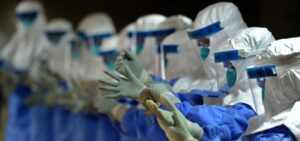

It’s been decades since global health issues are at the core of the debates between healthcare providers, scientists, institutions, and donors. A potential global pandemic has always been predicted. For instance, the world will sooner or later face another influenza pandemic that could be more horrific than the previous one known in 1918, which is deemed so far as the deadliest disease in human history. John M. Barry wrote in an article published in November 2017 “today we worry about Ebola or Zika or MERS or exotic pathogens, not a disease often confused with the common cold. This is a mistake.” While we cope these days with Covid-19, we know perfectly well that another scourge that cannot be defined for now is coming soon. But, are we aware of that dread? When are we going to be ready and how? We will be succinctly presenting the history of Coronavirus outbreaks, highlighting the weaknesses of the world healthcare systems against Covid-19 and exposing as well the factors to consider to get ready for the next outbreak.
The human coronaviruses were for the first time identified in 1965. Then, coronavirus was, according to the Centers for Disease Control and Prevention (CDC), the cause of the severe acute respiratory syndrome (SARS) appeared in 2002 that had then triggered the outbreak of 2003. The World Health Organization (WHO) reported that 8439 had been infected and 812 died from the virus that had been spread across 30 countries. Since its discovery, coronavirus has always been a threat to public health safety. The former director of WHO, Dr. Gro Harlem Brundtland, said after the outbreak had been contained “this is not the time to relax our vigilance. The world must remain on high alert for cases of SARS. In the same wave of ideas, he suggested that “…research into SARS must continue. Scientific evidence will be crucial for our ability to best handle another SARS outbreak should there be one.” Since 2003, 5 new human coronaviruses have been discovered (Jeffrey and Kenneth, 2005). Less than 10 years later, a deadly respiratory disease, caused by a type of coronavirus, was discovered in 2012. This disease called MERS-CoV must be according to scientists under strict control due to its potential to cause an epidemic.
Here we go again in 2020 struggling against another type of coronavirus named Covid-19 or SARS-CoV-2. Yet coronavirus is just one of a bunch of viruses that can provoke a catastrophe. The thing is everybody knows at any time the world may face a pandemic due to viruses that had previously affected a lot of folks. But it seems that the lesson is far from learning because the world healthcare systems have been overwhelmed by Covid-19 in less than 30 days. The best healthcare systems have not even been able to handle the virus when it was first declared. Governments, health agencies, organizations have been groping for a way to contain the outbreak, but it’s been getting worst from the beginning. In spite of international scientists, public health experts, epidemiologists, physicians, nurses, and excellent epidemiological institutions, we have been caught off guard to the extent that 20,176,050 cases have been globally reported today with 738,665 deaths (Johns Hopkins University & Medicine).
Indeed, now is exactly the time to get ready for the next pandemic. While the fight against SARS-CoV2 is not yet finished, however a series of important things could be done from now on to prepare the upcoming epidemic. We are going to consider the 3 following key factors in this approach: healthcare quality, funding, education of the public. Let’s start with the first one which is healthcare quality. No health system can meet an effective preparedness without in advance defining the quality of care as the most important step to consider especially when it comes to public health. It is defined by WHO as “the extent to which health care services provided to individuals and patient populations improve desired health outcomes. To achieve this, health care must be safe, effective, timely, efficient, equitable and people-centered.” That literally means healthcare workers cannot provide care just for the pleasure of doing it i.e. without betterment. Thus, it is so important because in a large-scale event the same routine mistakes cannot be made, which would be fatal for a large public. The readiness of our health systems depends on the quality of care we used to provide to the public.
The second factor is funding. This one is essential. Preparedness is almost impossible without funding because medical equipment is needed in the process and they are costly. For instance, we have recently heard a lot about PPE(Personal Protective Equipment), ventilators, N95 masks, and so forth in the fight against Covid-19, but these equipment are just basics comparing to the cost of other factors like maintaining a system to produce diagnostic tests for millions of people. Speaking of basics, even face masks have been a real issue in countries like the United States especially at the onset of the pandemic. Therefore, the state officials must reflect on a plan to decrease unnecessary expenses in certain sectors in other to save more funds allocated in preparedness. Private and public institutions should constantly invest in events dedicated to preventing catastrophes. In fact, it’s always been hard for them to invest in stuff like that; Bill gates claimed on TED talk in 2015 “We have actually invested very little in a system to stop an epidemic. We’re not ready for the next epidemic. Dennis Caroll, a former research virologist said “When SARS happens… political leaders and private donors react with fretful largesse, but when the crisis ends, we see a total collapse of those kinds of investments” (The New Yorker, May 2020). Besides, we need more professionals trained to face the next pandemic, more research should get underway; that cannot be done without funds.
Education is the third factor: the big issue overall. Healthcare quality and funding are strictly going with the education of the public. Without this one, these two terms highlighted will not be effective. People should be aware of viruses that can eventually cause an epidemic and know what to do before the threat is present. It’s not a surprise that some people barely know during the pandemic of Covid-19 the medical meaning of the words quarantine, isolation, asymptomatic, etc. People are usually reluctant to do what they don’t even understand. How can you urge them to follow a rule that is considered a violation of their right? Most people are not going to squeeze into the guideline of being confined at home. But if they knew in advance that in a pandemic strict measures could be taken to protect lives, they would behave. Then, healthcare professionals, journalists, podcasters, public figures, health organizations are responsible for promoting images, videos, articles, or in one word contents related to epidemic and disaster i.e. how to prevent an outbreak and what to do if despite all it happens, focusing on public behavior. The energy we have to tell people to stay home during Covid-19 is outstanding, so if we had that same energy to tell them what to do just in case, that would save hundreds of lives. We need to spend more time to educate the public because ignorance is more dangerous than the threat itself. Also, good education cripples discrimination, people will know that a virus that causes an epidemic may be from anywhere in the world.
Ultimately, SARS-CoV-2 would have been handled if our leaders and the population were well-educated about emergencies. Despite all, some people might be skeptical, nevertheless, that wouldn’t be as dreadful as it is right now. Now is the time to set a plan for preparation because after this epidemic is gone, we will be celebrating with our friends and families, then we might forget everything. We need robust health structures and everyone must have access to healthcare. Most of the world healthcare systems have failed to save the lives of human beings affected by Covid-19. This alarming situation has somehow exposed the weaknesses of the majority of health care systems, struck down unexpectedly. While we are pushing the coronavirus away, it’s not impossible that another virus appears and causes another epidemic. Hence, it isn’t either impossible to get ready for another epidemic in the midst of one. Well, the following quote of Beth Cameron extracted from The New Yorker is worth to be reminded “You’re not going to stop outbreaks from happening. But you can stop outbreaks from becoming epidemics or pandemics.”
Weetherson Pierre, BSN, RN
References:
Quammen, D. 2020. Why weren’t we ready for the coronavirus? https://www.newyorker.com/magazine/2020/05/11/why-werent-we-ready-for-the-coronavirus
Wessner, D.R. 2010. The Origins of Viruses. N. Ed.
Jeffrey, K., Kenneth, M. 2005. History and Recent Advances in Coronavirus Discovery. The Ped. Inf. D. J.
Yang Y., and al. 2020. The deadly coronaviruses: The 2003 SARS pandemic and the 2020 novel coronavirus epidemic in China
Frieden T. 2020. A coronavirus pandemic is inevitable. What now? CNN health.
World Health Organization. 2003. SARS outbreak contained worldwide. https://www.who.int/mediacentre/news/releases/2003/pr56/en/
Centers for Disease Control and Prevention. 2013. CDC SARS Response Timeline. https://www.cdc.gov/about/history/sars/timeline.htm